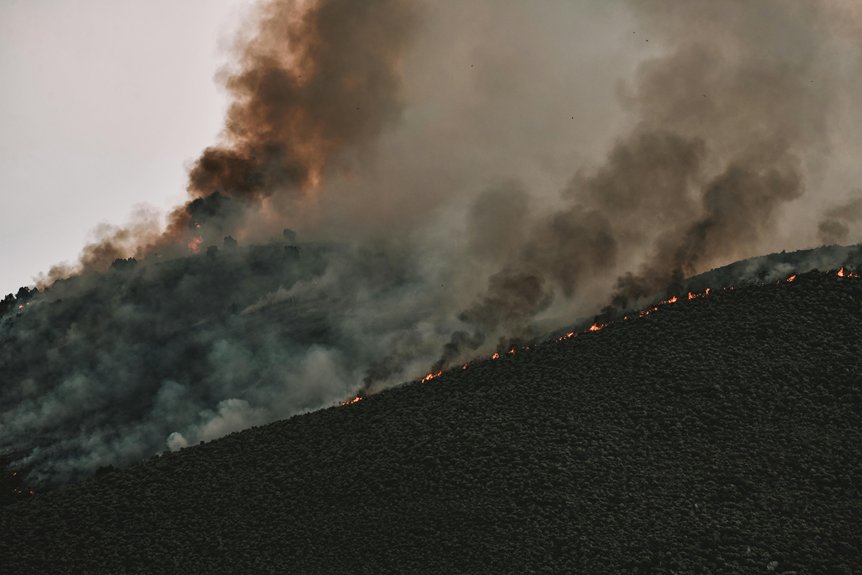
Today, you might notice that the air in Irvine feels particularly heavy and unclean. This deterioration in air quality stems from a mix of nearby wildfires, stagnant weather patterns, and urban pollution. These factors work together, releasing harmful particles and trapping them in the atmosphere, which can pose significant health risks. But what exactly is contributing to this crisis, and how can you protect yourself from its effects?
The Impact of Nearby Wildfires on Air Quality
As wildfires rage in nearby areas, you might notice a significant decline in air quality in Irvine. The smoke billows into the atmosphere, carrying harmful particles that can irritate your lungs and throat.
You may experience coughing, a scratchy throat, or even difficulty breathing, especially if you have pre-existing conditions.
When wildfires burn, they release volatile organic compounds (VOCs) and other pollutants, which can linger in the air long after the flames have been extinguished.
It’s essential to stay informed about air quality alerts and limit outdoor activities when conditions worsen.
Consider using air purifiers indoors and wearing masks if you must venture outside.
Your health and well-being, as well as your community’s, depend on taking these precautions during wildfire events.
How Weather Patterns Influence Air Pollution
When weather patterns shift, they can dramatically affect air pollution levels in Irvine. Changes in wind direction can either disperse pollutants or concentrate them in certain areas, impacting your breathing and overall health.
For instance, if strong winds blow in from the coast, they might carry fresh air, helping clear out stagnant pollution. Conversely, temperature inversions can trap smog close to the ground, worsening air quality.
Rain can also play an essential role; it washes away harmful particles, offering temporary relief. Understanding these patterns can empower you to take proactive steps on days when air quality dips, like limiting outdoor activities or using air purifiers.
The Role of Urban Pollution in Irvine’s Air Quality
Urban pollution greatly impacts Irvine’s air quality, often stemming from the bustling activity of daily life.
As you navigate the city, consider how vehicle emissions, industrial discharges, and even construction sites contribute to the haze that can linger in the atmosphere. Each time you drive or walk past heavy traffic, you’re witnessing firsthand the effects of urbanization.
These pollutants can combine with natural elements, creating smog that obscures your view and threatens your well-being.
By being mindful of your transportation choices and supporting local initiatives to reduce emissions, you can help improve the air quality in your community.
Together, your efforts can foster a healthier environment for everyone, ensuring that Irvine remains a vibrant place to live and thrive.
Understanding the Effects of Smoke and Ash on Health
The air quality in Irvine isn’t just influenced by urban pollution; it can also be severely affected by smoke and ash from wildfires or controlled burns. When these particles linger in the atmosphere, they can pose serious health risks.
You might experience irritation in your eyes, throat, or lungs, making everyday activities uncomfortable. Smog can exacerbate respiratory issues, particularly for children and the elderly.
It’s vital to monitor air quality levels and stay indoors when conditions worsen. Using air purifiers can help, but it’s important to stay informed about local advisories.
The Connection Between Climate Change and Air Quality
As climate change continues to intensify, its impact on air quality becomes increasingly evident. Rising temperatures and shifting weather patterns contribute to more frequent wildfires, which release harmful pollutants into the air.
You may notice that these pollutants linger longer in warmer conditions, exacerbating existing air quality issues. Additionally, climate change can alter wind patterns, which can trap pollutants in urban areas, making it harder for you to breathe clean air.
Increased humidity can also promote the formation of ground-level ozone, a significant respiratory irritant. Understanding this connection empowers you to advocate for environmental policies while fostering awareness in your community.
Together, you can work towards a future where clean air is a shared priority, benefiting everyone’s health and wellbeing.
Steps Residents Can Take to Protect Themselves
With the growing challenges posed by climate change, taking proactive steps to protect yourself from poor air quality has never been more important.
Start by monitoring air quality indices daily; apps or local news can help you stay informed. When pollution levels rise, limit outdoor activities, especially strenuous ones. Keep windows closed to prevent outdoor air from seeping in, and use air purifiers if possible.
Creating a clean indoor environment can greatly improve your well-being. Consider wearing masks designed for air filtration when you must go outside during high pollution days.
Finally, stay hydrated and nourish your body with healthy foods to strengthen your immune system. By taking these steps, you not only protect yourself but also contribute to community resilience.
Long-Term Solutions for Improving Air Quality in Irvine
While tackling air quality issues may seem challenging, Irvine has a range of long-term solutions that can lead to significant improvements.
You can advocate for greener public transportation options, like electric buses and bike lanes, making it easier for everyone to reduce vehicle emissions. Supporting local initiatives for urban tree planting not only beautifies the city but also helps filter pollutants.
Promoting energy efficiency in homes and businesses through incentives can reduce reliance on fossil fuels. Additionally, engaging with community programs that focus on clean energy sources will foster a culture of sustainability.
Conclusion
In conclusion, today’s poor air quality in Irvine is a complex mix of wildfires, stagnant weather, and urban pollution. The smoke and harmful particles can seriously impact your health, so it’s essential to take precautions. Stay indoors, use air purifiers, and keep an eye on air quality updates. While immediate measures can help, advocating for long-term solutions will guarantee a healthier environment for you and future generations. Together, we can work toward cleaner air for everyone.